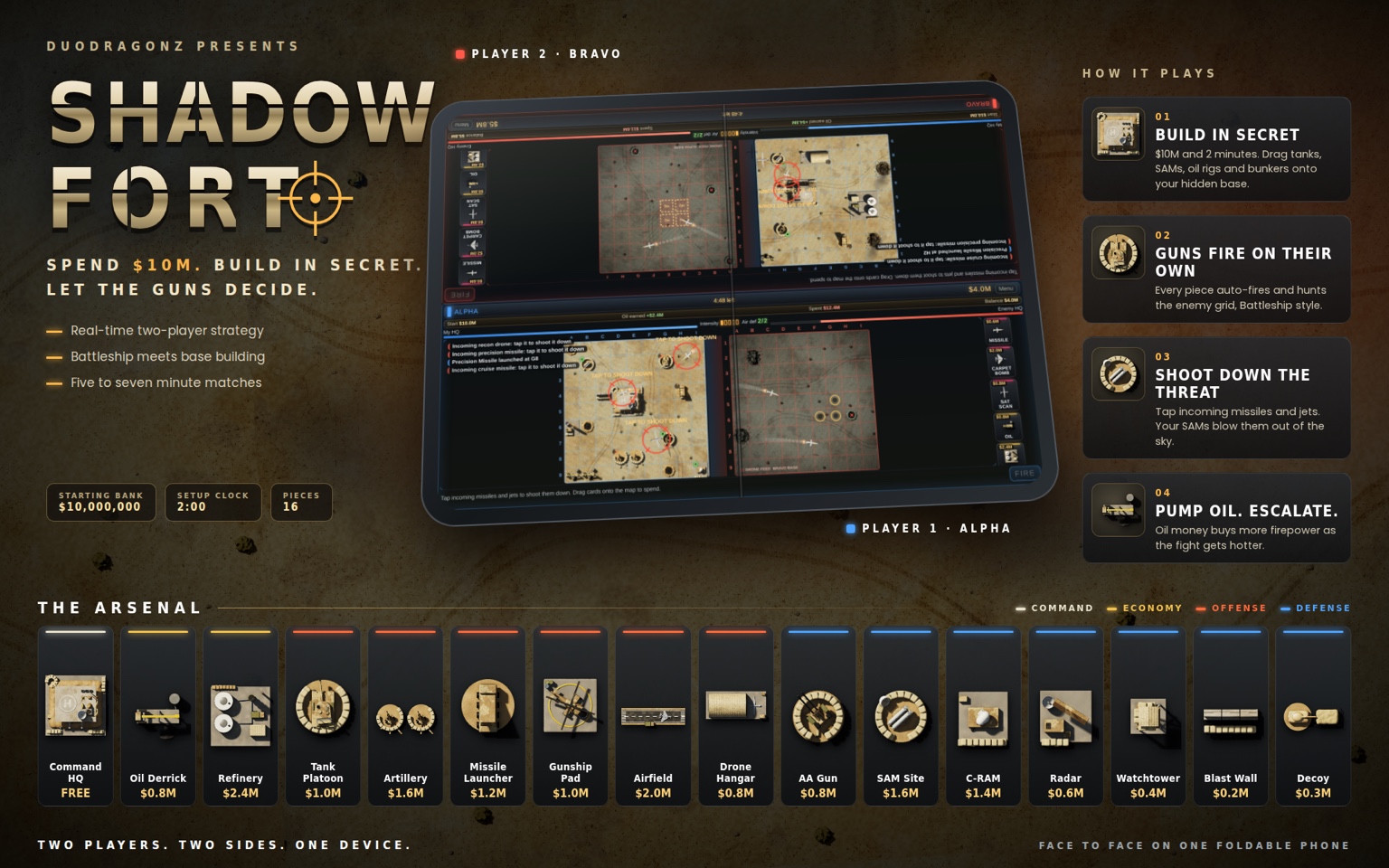
Shadow Fort is in development. This first look introduces the artwork and the experience it proposes. There is no public demo, download or confirmed device-support list on this page.
A hidden-base game starts with a good question: what did the person across from you build? Shadow Fort explores that question through a military strategy concept where the opening plan matters, but the battle still asks for your attention.
The first artwork sets out a clear mood: sand-colored structures, dark tactical grids, and red Bravo and blue Alpha positions facing opposite directions. A strip of 16 proposed pieces runs along the bottom, grouped into command, economy, offense and defense. That range hints at the central choice: how much of your opening budget belongs in the next attack, and how much belongs in surviving the answer?
A base-building duel with two kinds of decisions
The poster proposes a $10M in-game starting budget and a two-minute building phase. Tanks, artillery, aircraft facilities, oil infrastructure and defensive pieces share that budget. The interesting design opportunity is the trade-off between them: spending on immediate pressure could leave a base exposed, while investing in income might require surviving long enough for it to matter.
Those are balance questions to explore, rather than a proven winning strategy. Costs, unit behavior and the final rules remain open to iteration.
The battle concept then combines automatic fire with active defense. Units would hunt the opposing grid while players respond to incoming threats. The artwork specifically suggests tapping missiles and jets, with oil production supporting additional firepower as the match develops. Its five-to-seven-minute match length is a target, not a measured playtest result.
That combination gives Shadow Fort its design tension: commit to a plan, then stay involved when the plan meets an opponent. Automatic attacks should leave room to think; active defenses should give each player a meaningful reason to keep watching.
Why the players face opposite directions
Alpha and Bravo are rotated toward opposite edges of the pictured device. Each side has a base view and an opposing grid. For two people sitting across a table, that orientation makes the intended relationship easy to understand: this is your side, that is your rival, and the match happens between you.
Readable orientation and hidden information are separate design problems. Turning a panel around can make its labels easier for its owner to read, but it does not hide the panel from somebody who can still see the screen. A concealed-base game has to protect the information that makes its decisions interesting.
A foldable, tent-style setup is one direction we want to explore. The promise is personal views with the shared reactions of a tabletop game. Whether that works depends on viewing angles, software behavior and actual device support. The artwork is not evidence that those requirements have been solved.
What needs to feel fair
For this concept to become a satisfying duel, the layout and rules need to answer a few practical questions:
- Can each player keep their plan private? Building, interruptions and returning to the match should not accidentally reveal the opponent’s base.
- Can both players read the action? A threat needs a clear direction, an understandable target and enough visible feedback to explain what happened.
- Do simultaneous inputs stay separate? A defensive tap on one side must not operate the other player’s controls.
- Does every loss suggest another choice? Players should be able to connect the outcome to the plan they made or the response they missed.
These are development questions, not completed test results. They matter because a short match only earns its rematch when both players understand the contest.
Where Shadow Fort fits at DuoDragonz
Puzzle Rush explores a simultaneous puzzle race. Fleet Fighters explores naval searching and striking. Shadow Fort adds a different starting decision: build the hidden base your opponent will have to deal with.
The shared direction is local rivalry with another person close enough to react to the result. The games have their own rules and development status, and the new art should be read as a first look at Shadow Fort’s direction.
Visit the Shadow Fort game page for the full concept poster and a concise project overview. If you are choosing something to play today, our two-player iPhone games guide explains the difference between shared-device play, separate-device multiplayer and verified hardware support.
The budget, arsenal, timing and controls described above come from the supplied Shadow Fort artwork. No release date, hands-on gameplay result or device compatibility is being announced.